
Veneers are a beautiful way to correct the appearance of discoloured, chipped, broken, or crooked teeth and can sometimes be used to correct unwanted or uneven spacing. They can be made of either porcelain or composite (a white filling material) that is glued to the front of the tooth.
Veneers can be made out of porcelain or a white filling material called composite. Porcelain, once bonded to the tooth, is the stronger of the two, and fantastic aesthetics can be achieved. Some tooth usually has to be cut away to allow these to be made. The same porcelain veneers shown unfitted above can be seen in the mouth as final restorations in the picture below.
They are mainly used to restore the upper front teeth. Some porcelain veneers prior to being fitted are shown below:

Veneers can amend the shape, colour, and (to a degree) position of a tooth, so there are many potential uses:
Composite is a tooth coloured restorative material. Composite veneers are usually made without removing tooth, although this means that their range of applications is slightly reduced. This material can also be bonded to teeth to repair broken corners, make a tooth look wider or make a tooth look flush with the adjacent teeth amongst other uses. Unlike porcelain, with time, composite can absorb some stain. Fortunately, this can usually be removed by polishing with the dentist or hygienist rather than replacement.

We can advise you as to the treatment options for your teeth. If needed, a mock up can be quickly applied to the teeth temporarily, or created by our dental laboratory to demonstrate what can be achieved.
Both porcelain and composite are translucent materials which complement and reproduce a lifelike natural appearance of teeth. A composite veneer or tooth repair can usually be done directly in the surgery without any intermediate steps. A porcelain veneer needs to be made by a dental laboratory. The tooth will be prepared by your dentist, and moulds taken. Temporary veneers will be fitted whilst the veneers are being handmade at the lab.
If several teeth are being veneered, the temporary veneers may be left in your mouth for a few days to ensure you are happy with the proposed appearance. Any changes you wish can be incorporated into the final design before the mould is taken. The time between moulds and fitting of the veneers is usually two weeks, and you may be asked to attend the laboratory to have the colour of the porcelain matched for your teeth.
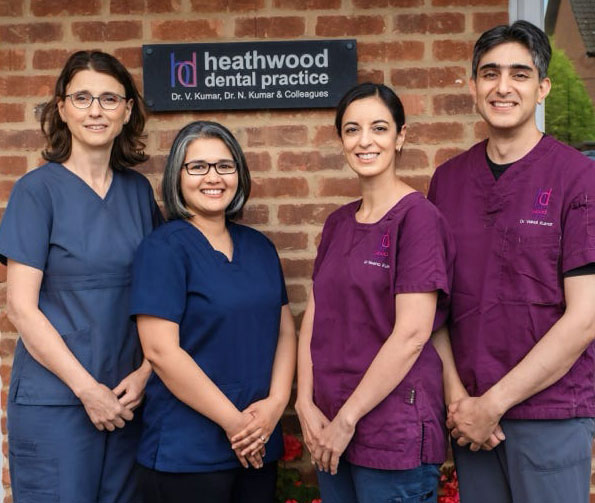
Yes, veneers are considered safe when placed by a qualified dental professional. The procedure involves minimal enamel preparation, and modern materials are biocompatible. At Heathwood Dental Practice, careful planning and clinical assessment help ensure veneers are appropriate and long-lasting for each patient.
Yes! Veneers are custom-made to match the shape, size, and shade of your natural teeth, creating a seamless and natural-looking smile. Our team at Heathwood Dental Practice ensures each veneer is tailored to complement your facial features.
Veneers are a long-term solution, but they may need replacing over time. Since a small amount of enamel is removed during preparation, the procedure is not reversible, making it important to consider your options carefully before treatment.
With proper care, porcelain veneers can last 10–15 years or more. Maintaining good oral hygiene, avoiding excessive force (like nail-biting or teeth grinding), and attending regular dental check-ups will help prolong their lifespan.
Veneers are typically made from porcelain or composite resin. Porcelain veneers are crafted in a dental laboratory and are known for their durability and stain resistance. Composite veneers are applied directly to the tooth and shaped during the appointment. At Heathwood Dental Practice, the material recommended will depend on your clinical needs, budget, and desired outcome discussed during consultation.
The veneer procedure is generally well tolerated. Local anaesthetic may be used during tooth preparation to ensure comfort. Some patients experience mild sensitivity afterwards, but this usually settles quickly. Your dentist will explain each step to help you feel prepared and informed throughout treatment.
Porcelain veneers typically last longer than composite veneers. With proper care, porcelain may last 10–15 years or more, while composite often lasts 5–7 years. Longevity depends on oral hygiene, bite habits, and regular dental reviews to monitor condition and function.
Veneers are generally recommended once teeth and jaw development are complete, usually in late teens or adulthood. Younger patients may be advised to wait until growth stabilises. A thorough assessment ensures suitability, including evaluation of enamel health and bite alignment before proceeding.
Veneers are primarily considered a cosmetic treatment because they enhance the appearance of teeth. However, they can also serve a restorative role by protecting worn enamel or minor structural damage. In many cases, they provide both aesthetic improvement and functional support, depending on the individual’s dental condition.

Fill in the form and our friendly team will be in touch with you momentarily
I have been at Heathwood Dental Practice for around 4 years. I have to say everyone at Heathwood Dental Practice is superb. Kerry, Helen & Charlene are superb at reception and ring me to see if I’m … Read More
I just completed a course of corrective dentistry using Smilelign from Heathwood. The whole procedure from start to finish was brilliant. Vishal provided a 1st rate assesment and guidance throughout t… Read More
I had a new to me local anaesthetic technique that was painless and didn’t leave me with any numbness in my mouth. And the tooth repair was amazing too. It was all very easy and relaxing. Thank you … Read More
Heathwood Dental is a fantastic dental practice. Dr Vishal Kumar is very knowledgeable, highly skilled and always takes the time to talk through any proposed treatment and particular techniques/materi… Read More
Never my favourite place to be but the experience was made much less painful by the lovely service I received. A professional hygienist who gave great advice and expert treatment. Would highly recomme… Read More
