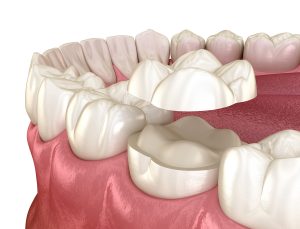
A crown is a type of dental restoration that fits over a tooth, much like a thimble does over a finger. In doing so, it recreates the natural shape of the tooth as well as helping to reinforce and strengthen the underlying tooth structure.
An onlay is similar to a crown in that it fits over the tooth. However, whilst a crown usually covers all the tooth structure visible above the gum, an onlay can be used to overlay the missing tips of a tooth without necessarily extending all the way to the gum, often making it preferable through less destruction of tooth structure.
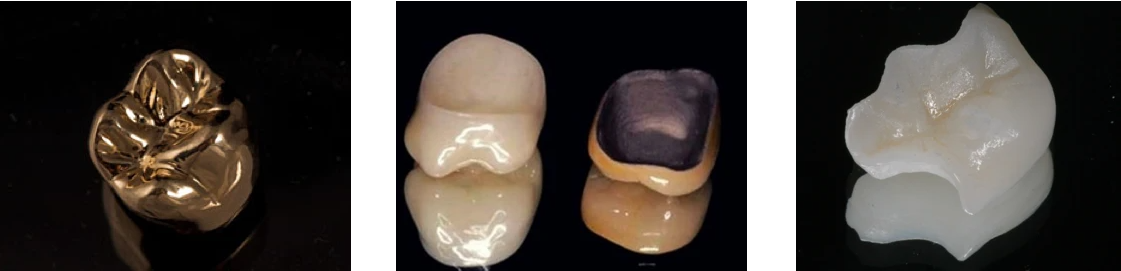
Gold (precious metal): This is a very useful material for onlays and some crowns, as it is strong and long-lasting. Aesthetically, they are more visible due to their colour, although this is balanced by the fact that they can be made very thin; thus, less tooth needs to be cut away during the preparation stage, meaning that more tooth is preserved. In addition, the alloy used is ‘biomimetic’. This means that they mimic natural tooth structure as they are quite inert, as well as being of similar hardness to natural teeth. As a result, the restoration is quite sympathetic to the tooth biting against it.
Porcelain bonded to precious metal: Most crowns are made of an underlying thimble of gold alloy overlaid with porcelain to produce a strong, long-lasting, natural-looking restoration. Due to their superior aesthetics, they are a good choice for most people. However, in order to produce this, more teeth need to be cut away than with gold. Porcelain is harder than natural tooth, which means it is less sympathetic to the tooth biting against it.
Porcelain: This is a modern technology used to create crowns and onlays made entirely of porcelain. The resulting teeth look extremely natural, as the natural translucency of a tooth can also be reproduced. Crowns made on the front teeth, where aesthetics are vitally important, are frequently made from pure porcelain.
There are a number of reasons why a crown or onlay would be needed:
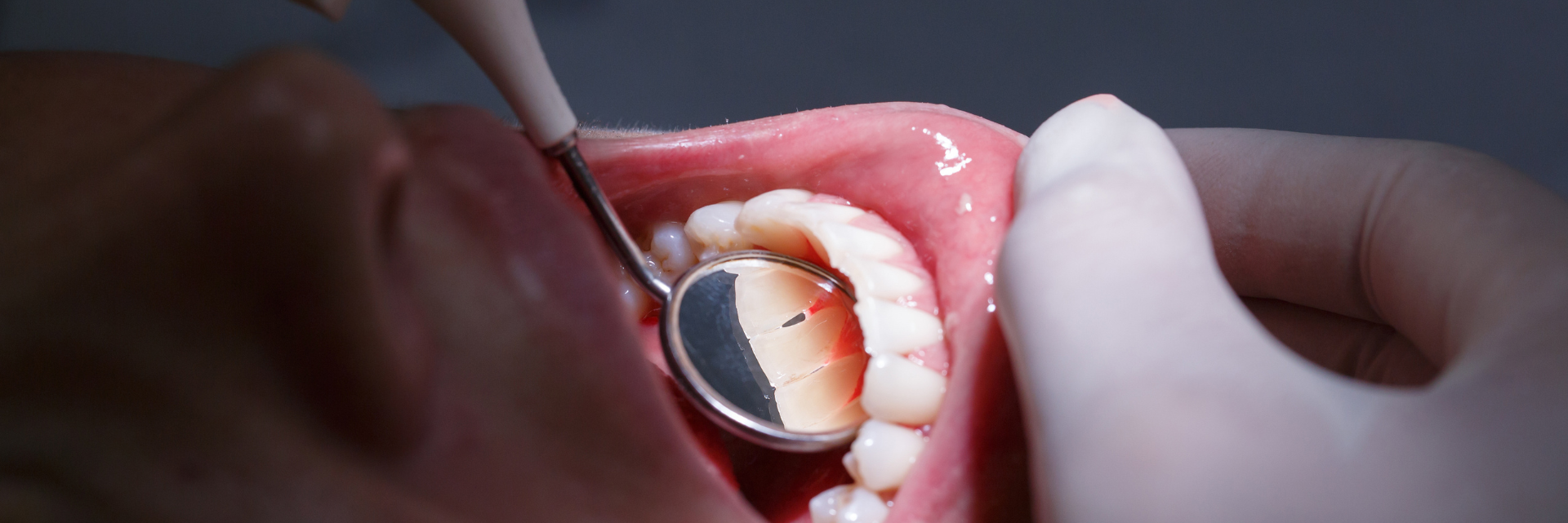
An x-ray is taken to confirm the quality of the underlying tooth and verify the health of the nerve and surrounding bone. A local anaesthetic is used to numb the area, and the shape of the tooth modified by the dentist to allow space for the crown or onlay to fit over the remaining structure. This is then recorded by a mould, which is sent to a qualified (British) dental laboratory who manufacture the restoration for your tooth. This appointment usually takes an hour, and finishes with a temporary plastic restoration being firmly cemented into place to keep the tooth feeling normal and comfortable until the next appointment.
You may be asked to to attend the laboratory to have the colour of your crown porcelain matched to your natural teeth. Usually two weeks later, a second shorter appointment of roughly 30 minutes is needed to fit the final crown.
With proper care, crowns and onlays can last 10–15 years or longer. Regular dental check-ups, maintaining good oral hygiene, and avoiding excessive force (such as teeth grinding) can help extend the lifespan of your restoration.
Crowns and onlays are made from high-quality materials like porcelain, which closely mimic the appearance of natural teeth. Once placed, they blend seamlessly with your smile, providing a natural and aesthetically pleasing result.
No special care is required, but it’s important to continue practicing good oral hygiene by brushing and flossing daily. Regular check-ups and cleanings will also help ensure your crown or onlay remains in good condition. Avoid chewing hard foods or using your teeth to open packages to prevent damage.

Fill in the form and our friendly team will be in touch with you momentarily
I have been at Heathwood Dental Practice for around 4 years. I have to say everyone at Heathwood Dental Practice is superb. Kerry, Helen & Charlene are superb at reception and ring me to see if I’m … Read More
I just completed a course of corrective dentistry using Smilelign from Heathwood. The whole procedure from start to finish was brilliant. Vishal provided a 1st rate assesment and guidance throughout t… Read More
I had a new to me local anaesthetic technique that was painless and didn’t leave me with any numbness in my mouth. And the tooth repair was amazing too. It was all very easy and relaxing. Thank you … Read More
Heathwood Dental is a fantastic dental practice. Dr Vishal Kumar is very knowledgeable, highly skilled and always takes the time to talk through any proposed treatment and particular techniques/materi… Read More
Never my favourite place to be but the experience was made much less painful by the lovely service I received. A professional hygienist who gave great advice and expert treatment. Would highly recomme… Read More
